Queensland’s roads are constantly evolving — from new highways to complex infrastructure projects that keep the state moving. Behind the smooth flow of every construction zone is a dedicated team of traffic controllers, ensuring the safety of workers, motorists, and pedestrians alike.
If you’re thinking about joining this growing industry, understanding the essential skills and licensing requirements is your first step. In this guide, we’ll explore the key skills for traffic controllers in QLD workzones, how a traffic control license QLD demonstrates your professional competency, and how Spotto Traffic Control Training can help you get certified with confidence.
Key Skills for Traffic Controllers in QLD Workzones

Traffic controllers play a vital role in Queensland’s expanding infrastructure network. As major projects roll out across the state—including busy roadworks and infrastructure upgrades on the Gold Coast—the demand for skilled, licensed traffic professionals continues to rise. These roles don’t just keep traffic moving—they protect lives and maintain compliance with workplace safety regulations.
The Role of a Traffic Controller in Queensland’s Infrastructure Growth

Traffic controllers are responsible for directing vehicles and pedestrians safely around work sites, often under dynamic and high-pressure conditions. According to the Department of Transport and Main Roads (TMR), all personnel involved in managing traffic at roadworks must be properly trained and licensed to ensure compliance and safety (TMR, 2024).
Beyond holding the right certification, successful traffic controllers are attentive, alert, and adaptable—traits essential for responding quickly to changing traffic conditions or emergencies.
Core Skills Every Traffic Controller Should Master

To thrive on-site, traffic controllers need a combination of technical and soft skills:
| Core Skill | Description |
| Communication and Coordination | Clear radio communication with other team members and work crews ensures smooth traffic flow. |
| Situational Awareness | Staying alert to potential hazards prevents accidents and keeps everyone safe. |
| Technical Precision | Correctly operating stop/slow bats, setting up signage, and following approved traffic management plans. |
| Teamwork and Reliability | Maintaining coordination across shifts and work zones builds trust within teams and employers. |
| Focus and Endurance | Work often occurs outdoors and in varying conditions, so stamina and focus are key. |
These skills, combined with proper traffic management training, form the foundation for earning your Traffic Control License QLD and starting a successful career in the field.
Why Professional Training Matters
Formal training not only teaches safety and operational skills but also ensures compliance with Queensland’s Workplace Health and Safety (WHS) laws. Accredited courses provide practical experience in real-world traffic control environments, ensuring graduates can confidently manage on-site conditions.
How a Traffic Control License QLD Demonstrates Competency on Site

Once you’ve built your foundational skills, the next step is obtaining your Traffic Control License QLD—a legal requirement for anyone directing traffic or managing roadwork zones. This certification proves that you have the practical knowledge, safety awareness, and professional conduct required for the role.
Understanding the Traffic Control License QLD Requirements
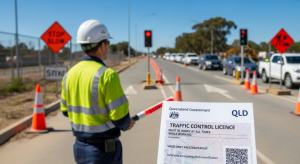
The Traffic Control License is issued under the authority of the Department of Transport and Main Roads (TMR). To qualify, individuals must:
| Step | Requirement |
| 1. Complete a TMR-Approved Course | Enrol in and complete a Traffic Control course through an accredited provider approved by the Department of Transport and Main Roads (TMR). |
| 2. Pass Assessments | Successfully pass both the theoretical and practical components of the training to demonstrate competency. |
| 3. Submit Documentation | Provide proof of identity and eligibility documents to TMR to finalise your traffic control licensing process. |
This process ensures that only competent individuals are authorized to manage roadwork and traffic flow across Queensland.
This level of regulation not only safeguards road users but also enhances professional credibility for license holders.
The Licensing Process: Step-by-Step
Here’s a simplified breakdown of how to obtain your traffic control license QLD:
- Enroll in a TMR-accredited course – Choose a reputable provider like Spotto that offers both classroom and hands-on learning.
- Complete the training and assessments – Courses combine theory (safety laws, communication, compliance) with practical training on simulated worksites.
- Submit your application to TMR – Once certified, you can apply for your official license to begin working as a qualified traffic controller.
Completing this process demonstrates not only skill but also compliance—a critical factor in securing work with major infrastructure and civil projects.
Proving Competency and Compliance On-Site
Holding a valid Traffic Control License QLD sends a clear message to employers and contractors: you meet industry standards and are qualified to operate safely and legally. Licensed traffic controllers are often preferred—or required—on large-scale worksites, where compliance audits and strict safety procedures are routine.
The Australian Industry and Skills Committee (AISC) underscores that licensing and credentialing systems are critical to ensuring workforce quality, safety and clear career pathways in sectors facing high demand (AISC, 2023).
Full-Service Support for Securing Your Traffic Control License QLD
While the licensing process may seem complex, Spotto Traffic Control Training simplifies every step. As a TMR-approved training provider, Spotto offers comprehensive programs designed to equip you with the knowledge, confidence, and certification you need to succeed.
How Spotto Simplifies the Licensing Journey
At Spotto, training isn’t just about ticking boxes—it’s about building competence and confidence. Each course is delivered by experienced trainers who bring real-world insights from Queensland’s roadwork environments. With flexible schedules and small class sizes, you receive the focused support needed to master every aspect of traffic control.
Spotto’s training covers:
- Traffic management setup and dismantling.
- Hazard identification and communication.
- Worksite safety and compliance with TMR standards.
- Real-world traffic simulation exercises.
By the end of your training, you’ll have both the technical and practical skills to earn your traffic control license QLD quickly and efficiently.
Comprehensive Support from Start to Finish
What sets Spotto apart is its end-to-end support model. From your first inquiry to post-certification guidance, Spotto’s team ensures you’re never left guessing about the next step.
Services include:
- Pre-course consultation to confirm eligibility.
- Hands-on training with experienced industry professionals.
- Application assistance to streamline your TMR submission.
- Refresher and compliance updates to maintain your qualification.
This full-service approach saves time and minimizes stress, allowing you to focus on building your career in traffic management.
Why Choose Spotto for Your Traffic Management Career
Spotto’s reputation as a trusted traffic control training provider in Queensland is built on years of proven experience, accreditation, and client success. The training team’s practical knowledge ensures that every graduate leaves with real-world readiness—not just a certificate.
Whether you’re new to the industry or seeking to renew your qualification, Spotto provides a reliable, compliant, and supportive pathway to certification.
Call to Action – Get Licensed with Confidence
If you’re ready to start a rewarding career in Queensland’s growing traffic management sector, now is the time to act.
Enroll in Spotto’s TMR-approved Traffic Control License QLD course today and gain the skills and confidence to work safely, efficiently, and legally across the state. Our friendly team is ready to guide you through the process—from training to certification and beyond.
Contact Spotto Traffic Control Training today to book your course or learn more about upcoming sessions.
Frequently Asked Questions (FAQs)
1. How long does it take to get a Traffic Control License in QLD?
Typically, it takes 2–4 weeks to complete the training, assessments, and processing of your license by the Department of Transport and Main Roads (TMR). Timelines can vary depending on provider schedules and document verification.
2. Who needs a Traffic Control License in Queensland?
Anyone responsible for directing traffic, setting up roadwork signage, or managing temporary traffic conditions on public roads in Queensland must hold a valid TMR-issued Traffic Control License.
3. What is the difference between a Traffic Control License and a Traffic Management Implementation (TMI) qualification?
A Traffic Control License allows you to manage traffic flow using stop/slow bats or portable devices.
A TMI qualification, on the other hand, authorizes you to design and implement traffic management plans for worksites — a higher-level responsibility.
4. How often do I need to renew my Traffic Control License QLD?
Licenses are typically valid for three years. Renewal requires evidence of recent work experience and, in some cases, completion of refresher training to ensure compliance with updated TMR standards.
5. What are the job opportunities after getting a Traffic Control License in QLD?
Licensed traffic controllers can work across construction sites, road maintenance projects, public events, and civil infrastructure operations. Many also advance into roles in supervision, traffic management design, or safety compliance.
Learn more about Traffic Control by visiting these resources:
- Traffic Management Company Pricing and Costs Explained
- Understanding Regulatory Traffic Signs in QLD: Safety, Compliance, and Spotto’s Role
- Common Situations That Lead to Traffic Infringement Notices (And How to Avoid Them)
- Career Progression in Traffic Control Jobs: Roles, Pay & Growth
- The Role of Traffic Management in Construction Projects
- How Traffic Control Plans Work: From Visual Overview to Custom Solutions for Events and Worksites